


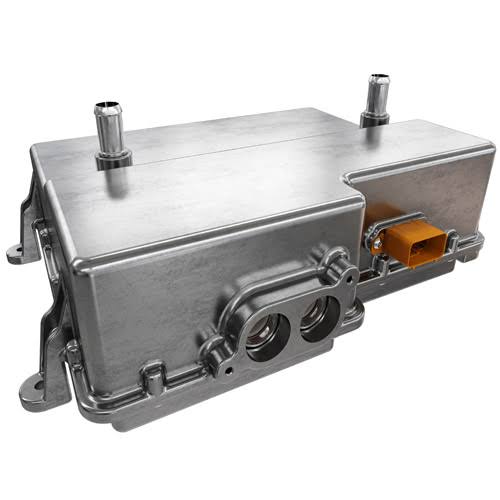
The most recent tech update reveals that the High-voltage Traction Inverter Market was valued at USD 3.5 billion in 2024 and is projected to reach USD 7.2 billion by 2033, indicating a CAGR of 8.5% from 2026 to 2033.
The high-voltage traction inverter market is witnessing significant growth, driven by the increasing adoption of electric vehicles and advancements in power electronics.
Innovations like silicon carbide (SiC) and gallium nitride (GaN) semiconductor materials are improving inverter efficiency and thermal management. Additionally, there is a growing trend towards integrating inverters with energy recovery systems to enhance overall vehicle performance.
Innovative and space-efficient inverter designs are becoming increasingly popular to address the spatial limitations in contemporary electric vehicles. The movement towards sustainable and environmentally friendly transportation options is also driving the global demand for sophisticated traction inverters.
Despite the optimistic growth outlook, the high-voltage traction inverter market faces several challenges, including high manufacturing costs and the complexities of thermal management in compact designs.
Related News: http://Firm Urges African Businesses to Adopt Artificial Intelligence
Ensuring system reliability under extreme operating conditions, such as high temperatures and vibrations, remains a major technical hurdle.
Furthermore, the need for standardized testing and certification protocols poses challenges for global market expansion. Supply chain issues related to advanced semiconductor materials also affect production scalability. Addressing these challenges is essential to fully realize the potential of high-voltage traction inverters in the swiftly evolving electric vehicle industry.
