

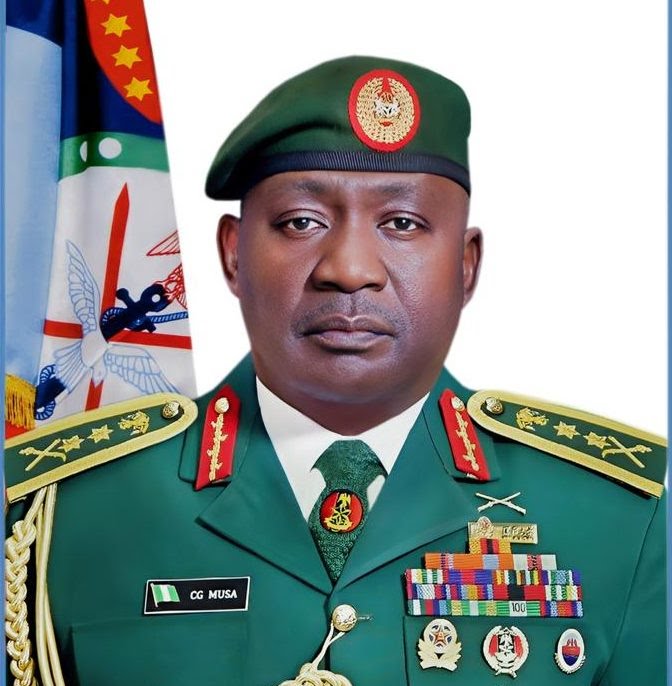
Chief of Defence Staff, General Christopher Musa, has appealed to host communities of the Trans Niger Pipeline to actively protect oil and gas infrastructure within their regions.
Speaking at a stakeholders’ forum organized by Pipeline Infrastructure Nigeria Limited (PINL) in Port Harcourt, Musa stressed that the adverse impacts of oil theft and pipeline vandalism, especially environmental and health risks, are felt most directly by local communities, not the oil companies.
He praised PINL for achieving zero infractions on the Trans Niger Pipeline and commended the company’s extended role in securing oil and gas assets in the Eastern Corridor.
According to him, “the environmental and health risks from pipeline damage affect locals more than the oil companies operating in the region.
“These assets are on your land. You benefit from them, so you must protect them and safeguard yourselves from the hazards.”
Musa praised PINL for what he described as its consistent efforts in securing the assets, particularly its record of zero infractions on the Trans Niger pipelines.
On his part, Akpos Mezeh, PINL’s community relations consultant, highlighted recent progress due to increased community cooperation, citing almost zero incidents in the last month.
He pointed to persistent challenges, such as, inadequate information sharing, threats to surveillance personnel, collusion by stakeholders, and leadership disputes.
Mezeh said “host communities should collaborate in tackling security challenges in the Niger Delta. PINL had expanded its mandate to include the security of all oil and gas infrastructure in the Eastern Corridor, including gas pipelines.
Also, the Keynote speaker, Otoyo Sunday criticized ongoing gas flaring and illegal refining, linking them to significant health risks. He urged the public to regard the environment as a “living entity” that needs protection.
Datolu Sokubo of the Ijaw Youth Council emphasized the connection between security and human development, stating that protecting infrastructure is unsustainable without addressing community welfare.
Also Read: NNPC Considers Selling Nigeria’s Refineries After $3 Billion in Repairs Yield Limited Results
He called on the federal government to invest more in education and healthcare in the Niger Delta.
“You can’t protect pipelines without addressing people’s welfare. Without our cooperation, infrastructure is never truly secure.”
To the federal government, he urged “to prioritize development, especially in education and healthcare, across the region.”
Eze Kelvin Anugwu, the traditional ruler of Ekpeye Land, supported the anti-bunkering campaign but also urged oil companies to take responsibility for gas flaring and its long-term consequences.
He called on PINL to intensify public awareness on the environmental and health dangers tied to oil operations.
“We keep advising our youths against bunkering. But oil firms must take responsibility for the long-term effects of their operations.”
This meeting reflects a growing consensus that security of oil infrastructure cannot be delinked from local development and environmental justice. While the military and private firms like PINL are tightening physical security, the voices of community leaders and activists underscore that socio-economic neglect and environmental degradation remain major concerns.
