


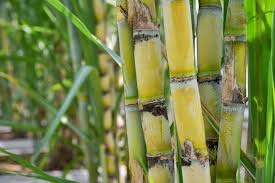
A promising industrial method has the potential to convert crushed sugar cane waste into green hydrogen with greater efficiency than initially anticipated, according to a simulation of the SECLG process conducted by the University of Johannesburg.
The simulation demonstrates high energy efficiency for green hydrogen while generating a minimal amount of undesirable tar, carbon monoxide (CO), carbon dioxide (CO2), and nitrogen (N) in comparison to traditional biomass gasification facilities.
This process may contribute to the decarbonization of energy-intensive sectors such as steel and cement in the future.
Current large-scale gasification approaches produce excessive amounts of tar. The existing large-scale gasification techniques are inefficient, do not produce substantial volumes of green hydrogen, and generate significant quantities of tar and other harmful by-products.
Professor Bilainu Oboirien from the University of Johannesburg explained: “The syngas generated from biomass gasification typically consists of hydrogen (10-35%), carbon monoxide (20-30%), carbon dioxide (10-25%), tar (10-100 g/nm3), nitrogen (40-50%), and a variety of hydrocarbons.”
“Moreover, the carbon dioxide produced is not captured by the system. The high levels of tar necessitate extensive additional equipment for purification, which significantly elevates operational expenses.”
A more effective approach to generating green hydrogen is the Sorption-Enhanced Chemical Looping Gasification (SECLG). Various research teams have been advancing SECLG over the last decade.
In comparison to current industry methods, SECLG can generate green hydrogen with much higher purity and yield from biomass. It is also significantly more energy-efficient and can capture carbon within the process itself.
Professor Oboirien and UJ Master’s student Lebohang Gerald Motsoeneng developed a mathematical model for the SECLG process.
They subsequently conducted an extensive Aspen Plus simulation of the SECLG method at the laboratory scale. They evaluated two known metal oxides used as oxygen carriers in the process to assess their impact on hydrogen yield and various other parameters.
“For SECLG, our model predicts hydrogen (62-69%), carbon monoxide (5-10%), carbon dioxide (less than 1%), tar (less than 1 g/nm3), nitrogen (less than 5%), and a mixture of hydrocarbons,” Oboirien stated.
This suggests that the combination of high green hydrogen yield, minimal tar production, and low nitrogen dilution in the gas could significantly lower economic costs by minimizing the necessary additional equipment.
The quality of hydrogen produced is expected to be high. However, it would still need further purification to achieve an industrial-grade gas ready for associated processes.
Currently, the model does not account for the degradation of the oxygen carrier and sorbent material over time in practical applications.
Related News: http://Magnetic Reconnection Near Sun Powers High-Energy Particles – Study
Additionally, it does not model or simulate the conveying of solid materials and effective separation of unwanted ash and char, which are essential for a functional SECLG system.
Oboirien mentioned: “We are currently working on further experimental proof of concept in a lab-scale environment. Through these tests, we aim to validate these models against experimental findings.”
Moreover, SECLG operates at approximately 600°C, 5 bar pressure, and involves multiple cycles. It also requires systems to convey the metal oxide oxygen carriers and sorbent material in this process.
These systems facilitate the continuous catalytic and carbon capture cycle, known as the ‘looping effect’ of the process.
“The research necessitates investment in infrastructure and collaboration within industries to achieve sustainability, and hopefully to unlock the potential of SECLG technology for green hydrogen,” Oboirien concluded.
