


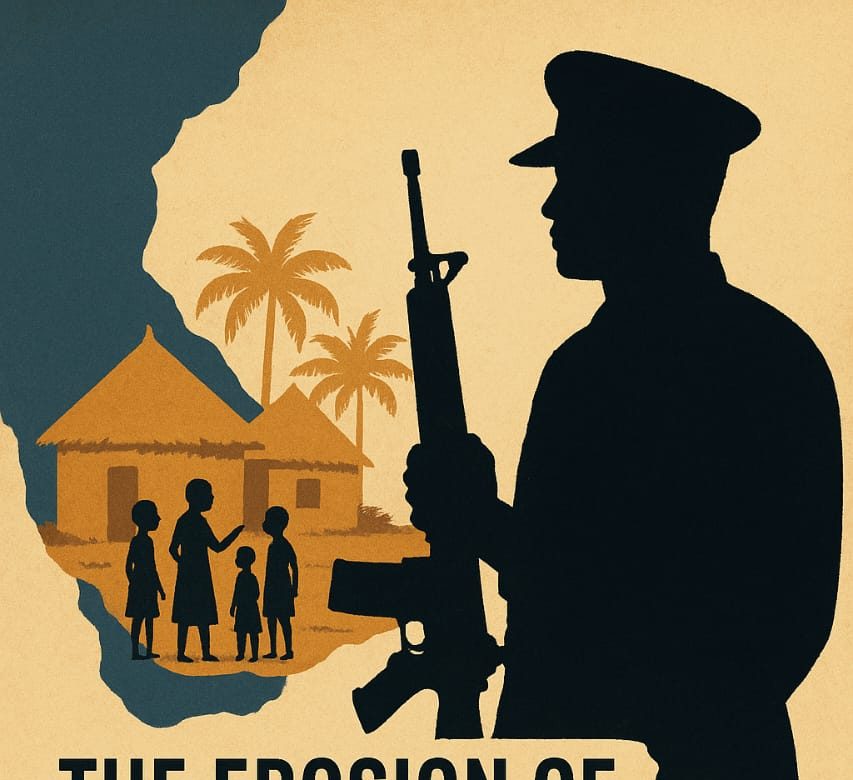
In the heart of the Niger Delta, where the rivers weave through the land like veins of life, there is a childhood tale whispered among the children of Rivers State. It speaks of the River Spirits, benevolent yet powerful entities that protect the community, ensuring harmony and prosperity. But it also tells of the Stranger King, an outsider who arrives with a claim to power, backed by superior force, only to disrupt the natural order. This lore, rich with metaphor, resonates deeply with the current political crisis in Rivers State, where Vice Admiral Ibok-Ete Ibas, a retired military officer, has been appointed as the Sole Administrator following a state of emergency declared by President Bola Tinubu.
The tale begins with the River Spirits, united in their guardianship of the community. However, a surprising development emerges: the spirits themselves become divided. Some, tempted by promises of greater influence or resources, align with the Stranger King, while others remain loyal to the people. This division mirrors the fragmentation within Rivers State’s democratic institutions, where local leaders, initially opposed to Ibas’s appointment, are revealed to have secretly formed an alliance with him, driven by personal or political gain. The convoy, the armed personnel, and the state of emergency are modern-day manifestations of the Stranger King’s force, overwhelming the local order and highlighting the fragility of unity in the face of temptation.
Another unexpected turn in the lore reveals that the Stranger King is not entirely an outsider. He is a local who has returned after years away, seeking revenge or redemption, his outsider status a facade to gain power. This resonates with Ibas’s role, as investigations uncover a hidden agenda behind the state of emergency—securing control over oil resources or undermining a political rival at the national level. The initial welcome of the Stranger King by the community, hoping for stability, parallels the public’s reaction to Ibas’s appointment, only to be followed by regret and resistance, as expressed in the frustrated comments on social media platforms like X.
Yet, hope persists in the lore. A hidden prophecy, known only to a few elders, foretells that the Stranger King’s rule will end not by the River Spirits but by a child from the community, symbolizing the future generation’s role in restoration. This suggests that the resolution of Rivers State’s crisis might lie with new leadership or a shift in public sentiment, challenging the narrative of inevitable external domination. In a dramatic turn, the River Spirits temporarily take human form to confront the Stranger King, personifying the potential for cultural and democratic institutions to assert themselves. This mirrors the unexpected resurgence of Governor Siminalayi Fubara, gaining significant support from a grassroots movement, reigniting the political conflict and testing Ibas’s authority.
Also Read: Supporters of Fubara, Wike Urged to Sue For Peace
The most surprising resolution in the lore is the Stranger King’s transformation. Instead of being defeated, he recognizes the error of his ways and chooses to integrate with the community, becoming a protector rather than a ruler. This offers a narrative of redemption and reconciliation, suggesting that even imposed leaders can adapt and contribute positively. It raises the possibility that Ibas might work towards genuine governance, though the path remains uncertain.
The river itself, personified as a living entity, begins to rebel against the Stranger King’s rule, causing floods or natural disruptions that force a reckoning. This symbolizes how the very land and resources of Rivers State might ultimately resist external control, aligning with environmental and resource politics in the Niger Delta. An ally’s betrayal, motivated by a desire to reclaim local power, further complicates the narrative, reflecting the shifting alliances within the state.
These developments in the childhood lore enrich our understanding of the political crisis. They capture the unpredictability and complexity of the situation, encouraging readers to see the crisis through a familiar yet freshly interpreted lens. The erosion of democratic norms in Rivers State is not just a political issue but a cultural one, where the very identity of the state is at stake. The tale warns us of the dangers of external domination and the importance of respecting local wisdom, urging us to strengthen our democratic institutions and ensure that the natural order of civilian rule is restored.
As we navigate this cautionary tale, let us remember the wisdom of the River Spirits and the resilience of the community. The future of Rivers State, and indeed Nigeria, depends on our ability to learn from the past and chart a course towards a democracy that is truly of the people, by the people, and for the people. The Stranger King’s story is not yet over, but the whispers of the river remind us that the power to shape it lies within us.
