


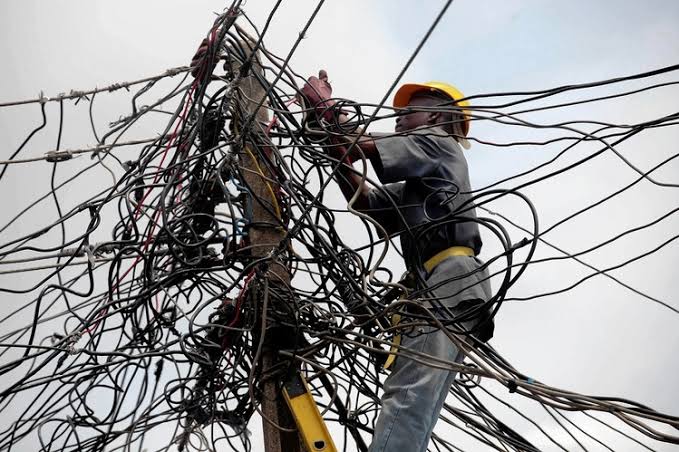
Nigeria has again been ranked as the country with the highest number of people without access to electricity, according to the 2025 edition of the Tracking SDG7: The Energy Progress Report, released on Wednesday by the World Bank, International Energy Agency (IEA), and other global partners.
The report reveals that as of 2023, approximately 86.8 million Nigerians live without electricity. This marks the third consecutive year Nigeria has held the top position globally for electricity access deficits, ahead of the Democratic Republic of Congo (79.6 million people without power) and Ethiopia (56.4 million).
The study notes that the 20 countries with the largest electricity access gaps accounted for 76% of the global total in 2023, with 18 of them located in Sub-Saharan Africa. Nigeria, the DRC, and Ethiopia alone make up about one-third of the world’s entire access deficit.
Despite some progress, Sub-Saharan Africa continues to bear the brunt of global energy poverty. The report explains that while 35 million people in the region gained access to electricity in 2023, rapid population growth, about 30 million annually, continues to offset these gains. The region still accounts for roughly 85% of people globally without electricity.
Also see: Ghana Coach Praises Nigeria’s Quality Players Ahead of Friendly
In Nigeria, the country’s Minister of Power, Adebayo Adelabu, had in April acknowledged that nearly 150 million Nigerians now have some form of electricity access. However, he admitted that “the real challenge lies in the stability and affordability of electricity.” According to him, the priority should not only be access, but ensuring that the power supplied is consistent, reliable, and affordable.
The 2025 SDG7 report also highlights the slow pace of global progress toward the United Nations’ Sustainable Development Goal of ensuring universal energy access by 2030. As of 2023, around 666 million people worldwide still live without electricity, with access rates stagnating in many low-income nations.
In response to this persistent gap, the World Bank and African Development Bank have launched the “Mission 300” initiative aimed at connecting 300 million people in Africa to electricity by 2030. Nigeria is one of the primary focus countries under this program, with plans to scale up mini-grid deployment, solar home systems, and other renewable-based solutions.
Earlier in March, Nigeria secured a $200 million agreement with pan-African firm WeLight to install hundreds of renewable energy mini-grids across underserved communities. The goal is to connect between 1.5 and 2 million people by 2027, especially in rural and off-grid areas.
Meanwhile, the report emphasises that achieving universal electricity access within the next five years will require much greater investment, particularly in off-grid and decentralised energy systems. It also recommends policy reforms, improved financing frameworks, and stronger institutional coordination to overcome persistent infrastructure challenges in countries like Nigeria.
As Nigeria continues to grapple with energy poverty, observers say significant and urgent actions are needed to ensure equitable and reliable access to power for all its citizens, especially in remote and vulnerable communities. Without accelerated interventions, the goal of universal electricity access in Nigeria by 2030 remains out of reach.
