


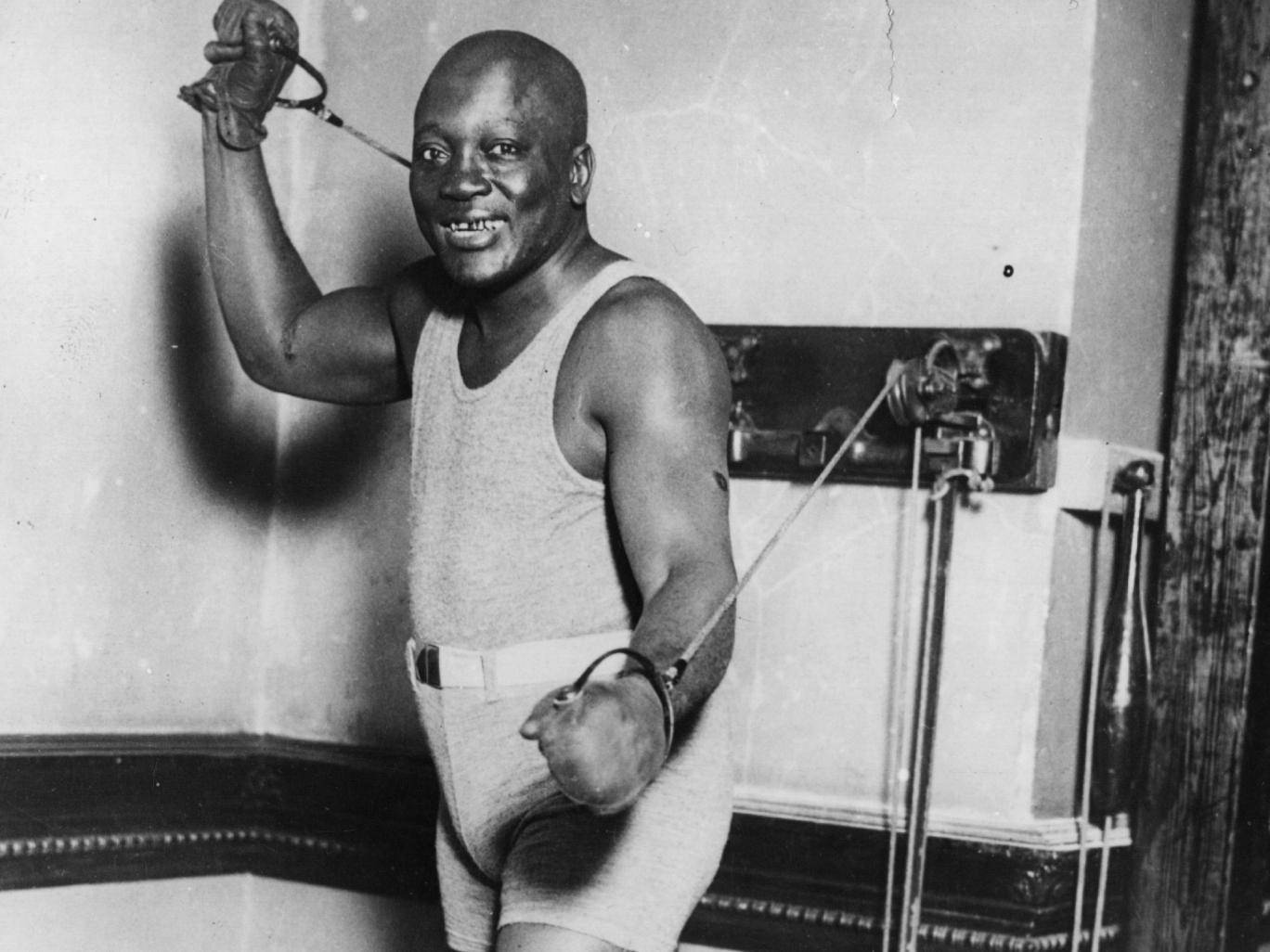
Donald Trump said he is considering pardoning a black boxer who had been convicted by all-white jury of accompanying a white woman across state lines more than 100 years ago.Mr Trump tweeted that Sylvester Stallone, the actor and writer famous for the boxing movie franchise “Rocky,” had called him and told the story of how Jack Johnson, the sport’s first black heavyweight champion, was found guilty in 1913 of violating the Mann Act, which forbade black men from transporting women across state lines for “immoral” purposes.The president, who can offer clemency for federal crimes, tweeted: “His trials and tribulations were great, his life complex and controversial. Others have looked at this over the years, most thought it would be done, but yes, I am considering a Full Pardon!”
Mr Trump tweeted that Sylvester Stallone, the actor and writer famous for the boxing movie franchise “Rocky,” had called him and told the story of how Jack Johnson, the sport’s first black heavyweight champion, was found guilty in 1913 of violating the Mann Act, which forbade black men from transporting women across state lines for “immoral” purposes.The president, who can offer clemency for federal crimes, tweeted: “His trials and tribulations were great, his life complex and controversial. Others have looked at this over the years, most thought it would be done, but yes, I am considering a Full Pardon!”
Mr Trump tweeted that Sylvester Stallone, the actor and writer famous for the boxing movie franchise “Rocky,” had called him and told the story of how Jack Johnson, the sport’s first black heavyweight champion, was found guilty in 1913 of violating the Mann Act, which forbade black men from transporting women across state lines for “immoral” purposes.The president, who can offer clemency for federal crimes, tweeted: “His trials and tribulations were great, his life complex and controversial. Others have looked at this over the years, most thought it would be done, but yes, I am considering a Full Pardon!”
However, his life of lavish spending and – according to many in both the African-American community and white America – not knowing his “place” in Jim Crow-era society, caught up with him after a time. In the wake of his conviction, Johnson fled the US to Canada and then France before returning to the US seven years later. He served a year in federal prison before being released in 1921.
Officially the policy of the US Department of Justice states that “processing posthumous pardon petitions is grounded in the belief that the time of the officials involved in the clemency process is better spent on the pardon and commutation requests of living persons”.
Posthumous pardons are not unheard of, however. Former president Bill Clinton pardoned Henry O Flipper, the first African-American officer to lead the Buffalo Soldiers of the 10th Cavalry Regiment during the Civil War who had been framed for embezzlement.
